
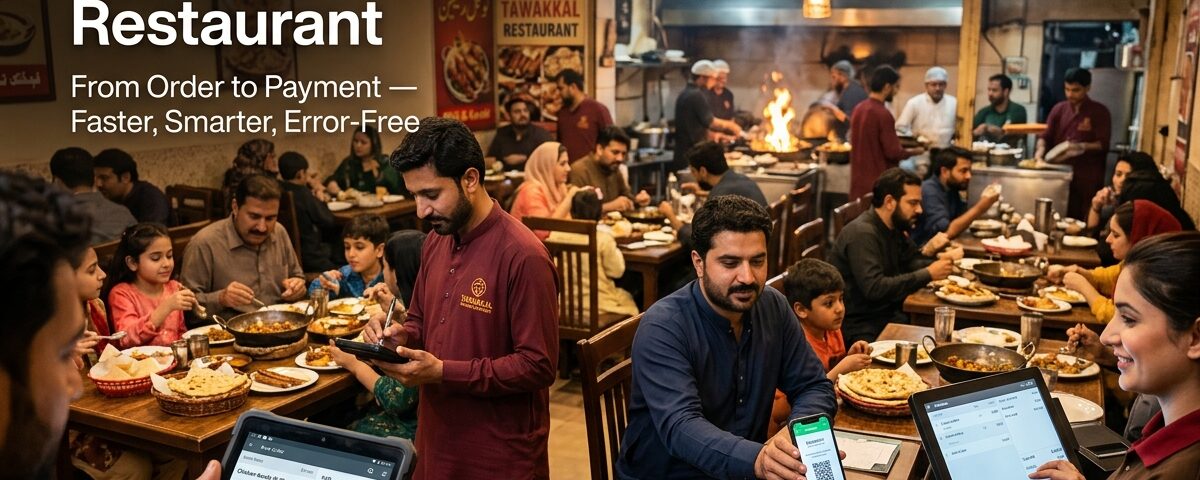
Running a restaurant in Pakistan, whether it’s a bustling karahi spot in Lahore’s Food Street, a trendy café in Karachi’s DHA, or a family diner in Islamabad, comes with its own set of challenges. Managing orders, handling cash, tracking inventory, and keeping customers happy all at the same time is no small feat. This is where a smart billing and order management solution becomes your most valuable tool.
If you’ve been wondering how a digital billing setup actually functions day to day in a food business, this guide is for you. It also helps to understand how a modern restaurant management solution can streamline operations, reduce errors, and improve overall efficiency in your business.
What Exactly Is a Restaurant Billing and Order System?
At its core, a restaurant’s digital management system is the central hub that connects your front-of-house staff, kitchen team, and business finances. Think of it as the brain of your restaurant. Every order taken, every rupee collected, and every item sold passes through it.
For many Pakistani restaurant owners, the shift from manual khata books and handwritten receipts to a digital setup can feel overwhelming. But once you understand how the system flows, the logic is simple and the benefits are immediate.
How the Order Flow Works: From Table to Kitchen
Step 1: Order Taking at the Table
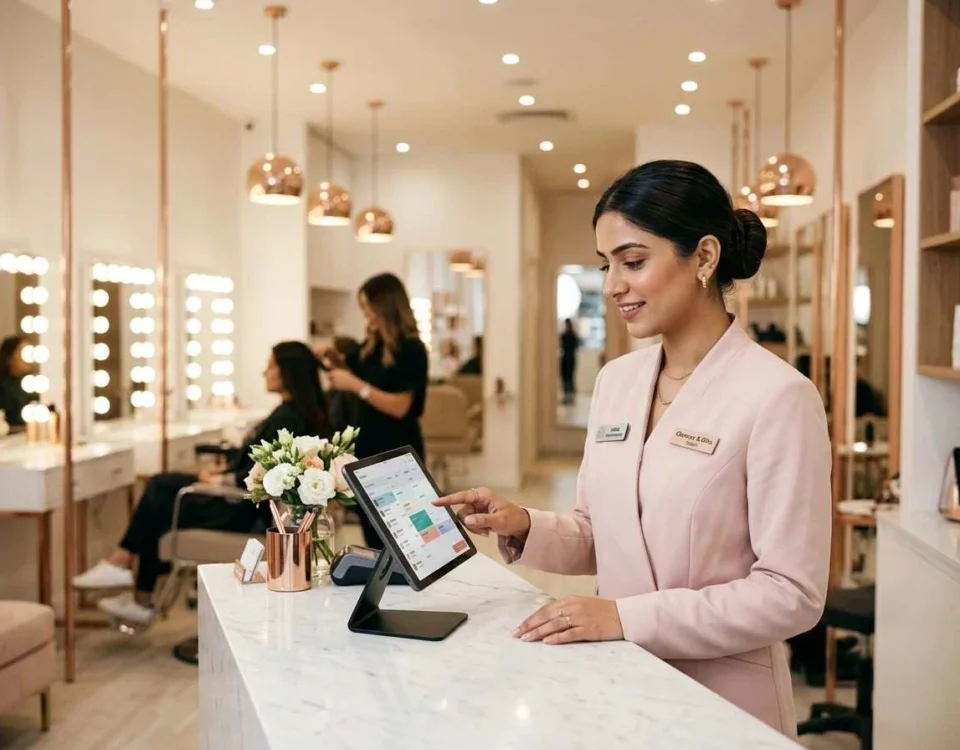
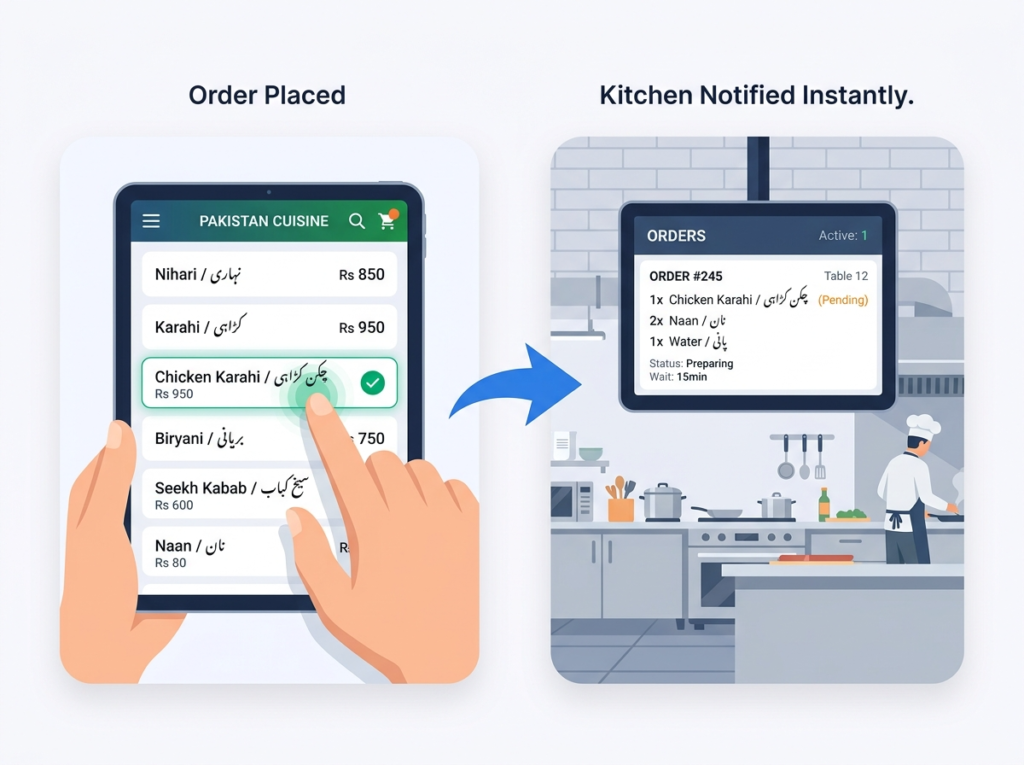
When a customer sits down and places an order, your waiter either enters it through a tablet, a touchscreen terminal, or a handheld device. The menu items are already loaded into the system, complete with prices and categories such as starters, mains, beverages, and desserts. There is no need for scribbling on paper or shouting across the floor.
Step 2: The Kitchen Gets Notified Instantly
As soon as the order is entered, it appears on a Kitchen Display Screen (KDS) or is printed automatically on a kitchen printer. Your chef sees exactly what has been ordered, in what quantity, and at what time. This eliminates confusion, reduces preparation errors, and speeds up your kitchen turnaround time, something every busy restaurant in Pakistan needs during lunch or dinner rush.
Step 3: Table Management in Real Time
A good digital order management setup shows you which tables are occupied, how long guests have been seated, and which orders are pending or served. For restaurants with multiple floors or outdoor seating, which is common in Pakistani eateries, this visibility is a game changer. Staff can be deployed more efficiently and customer wait times are reduced significantly.
How Payments Are Processed
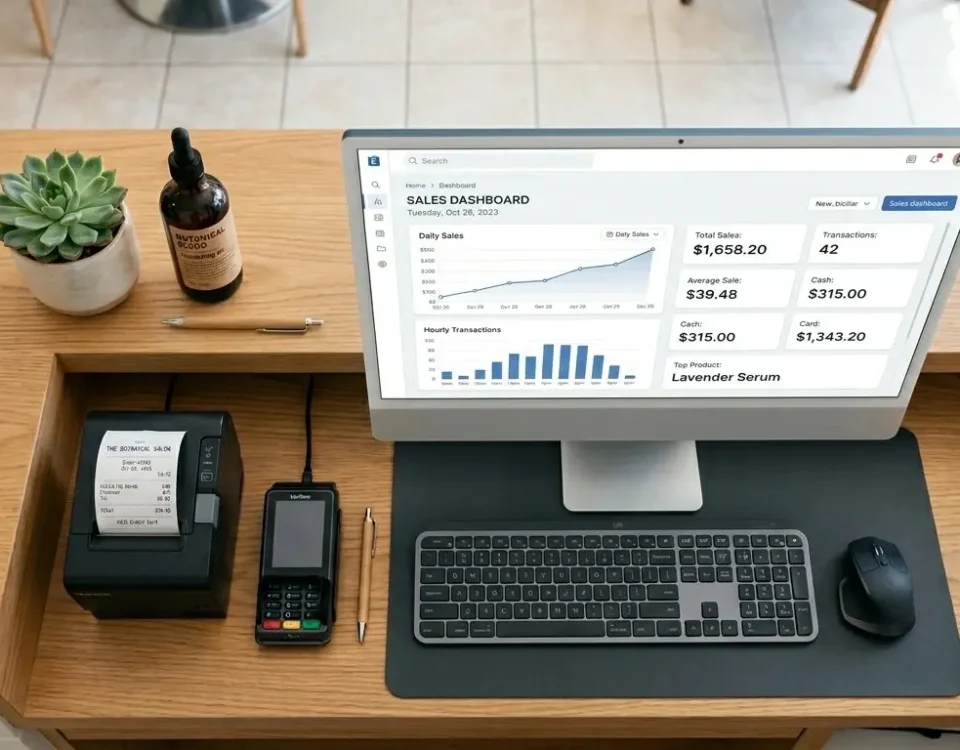
Once the meal is done, your staff generates a bill directly from the system. The itemized receipt is automatically calculated, including taxes or service charges if applicable. Pakistani customers increasingly pay via Easypaisa, JazzCash, bank cards, or cash, and a modern billing system accommodates all of these.
The payment is recorded instantly, the table is marked as available, and your end of day accounts are updated automatically. There is no need for manual cash reconciliation that takes hours every night.
Inventory Tracking: Knowing What’s in Your Kitchen
One of the most underrated features of a restaurant management setup is automated stock deduction. Every time a dish is sold, the ingredients used are subtracted from your inventory in real time. If your nihari requires 500 grams of meat per portion and you sell 30 plates in a day, the system has already calculated how much stock you have consumed.
This matters enormously for Pakistani restaurant owners who deal with fluctuating commodity prices and supply chain irregularities. You will get low stock alerts before you run out of key ingredients, helping you avoid the embarrassment of telling customers a menu item is unavailable and the financial loss that comes with it.
Sales Reports and Business Insights
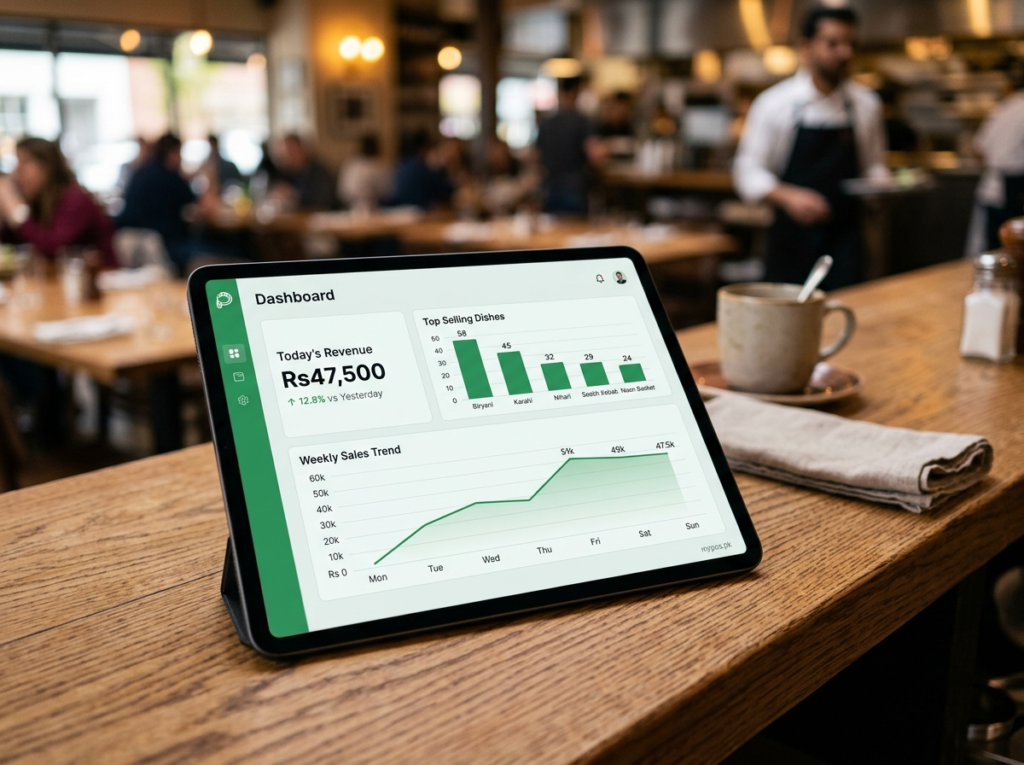
At the end of the day, week, or month, your management system compiles all transaction data into easy to read reports. You can see:
- Which dishes are your top sellers and which are slow moving
- What time of day your restaurant is busiest
- How much revenue each waiter or cashier is generating
- Your average order value per table
- Daily, weekly, and monthly income trends
For a Pakistani business owner making decisions about menu changes, staffing levels, or promotional offers, these insights are invaluable. Instead of guessing, you are making decisions based on real data from your own restaurant. If you’re evaluating which system can deliver these insights effectively, read our detailed breakdown of the Best POS for Pakistani Restaurants.
Staff and Shift Management
A complete restaurant management solution also helps you track staff clock ins, assign roles, and monitor performance. You can set permissions so that only managers can apply discounts or void orders, which reduces the risk of internal theft, a genuine concern for many restaurant owners in Pakistan.
Why mypos.pk Is Built for Pakistani Restaurants
Most international billing solutions are built for Western markets. They do not account for local tax structures, Urdu language requirements, or the specific way Pakistani restaurants operate, from dhabas to fine dining. mypos.pk is designed from the ground up with Pakistani businesses in mind.
The platform supports local payment methods, works reliably even in areas with inconsistent internet connectivity, and comes with customer support that understands your market. Whether you are running a single outlet or a growing chain across multiple cities, the system scales with you.
Common Questions Pakistani Restaurant Owners Ask
Do I need the internet for it to work?
Most modern solutions, including mypos.pk, offer offline functionality. Your operations continue uninterrupted even if the connection drops, and data syncs automatically when you are back online.
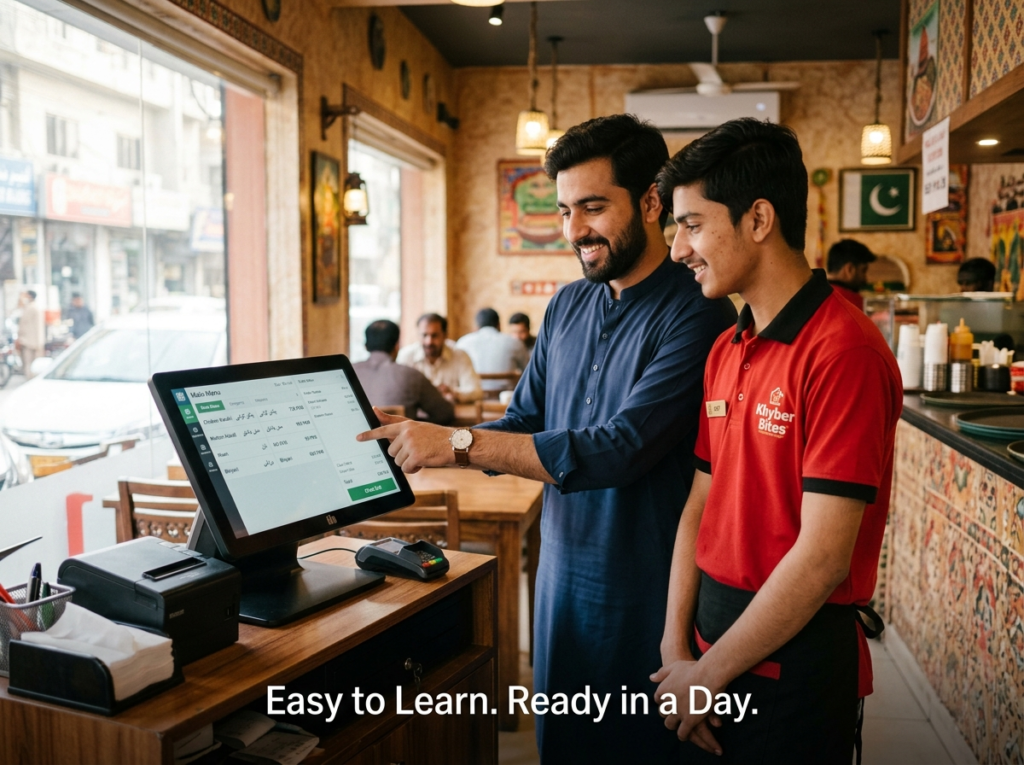
Is it difficult to train my staff?
The interface is designed to be intuitive. Most restaurant staff can be trained within a day, and the touchscreen-based operation means even staff with limited tech experience adapt quickly.
Will it work for a small dhaba or only big restaurants?
A digital billing setup works for any size of food business. In fact, smaller operations often see the biggest efficiency gains because they are replacing entirely manual processes.
Final Word
A restaurant’s order and billing management system is not just a luxury for large chains. It is a practical tool that helps every food business in Pakistan run more smoothly, more profitably, and with far less daily stress. From the moment a customer orders to the moment they pay and leave, every step becomes faster, more accurate, and fully trackable.