
Running a restaurant in Pakistan today is no small feat. Between managing walk-in customers, handling online orders, tracking inventory, and keeping your kitchen staff coordinated, the margin for error is thin. That is why investing in a reliable restaurant management software built specifically for the food service industry is no longer optional, it is a necessity.
But not every system delivers the same value. Whether you are running a small café in Lahore or a multi-branch dine-in chain in Karachi, there are certain core capabilities your system simply cannot afford to skip. This guide breaks them down for you.
1. Smart Order and Table Management
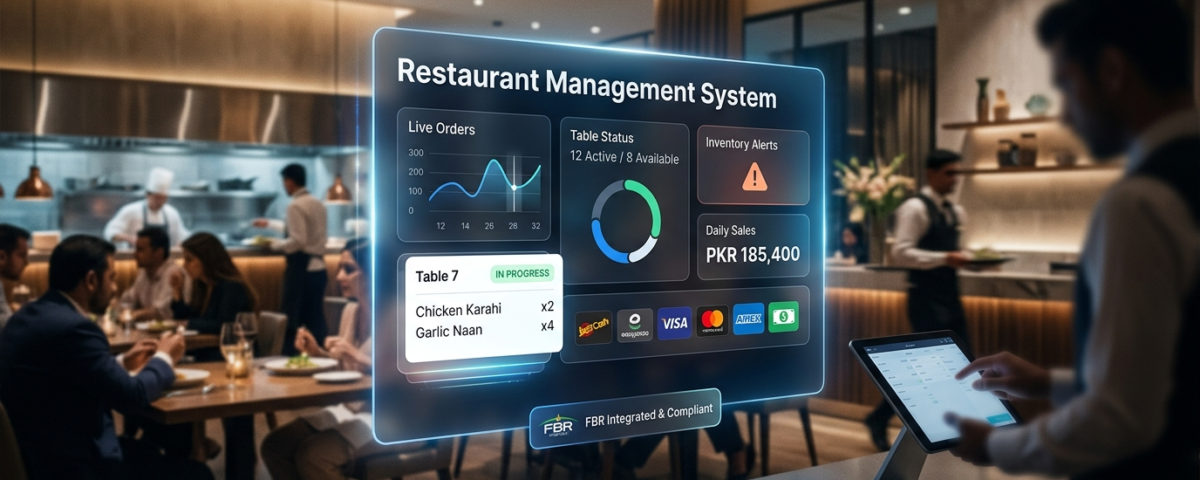
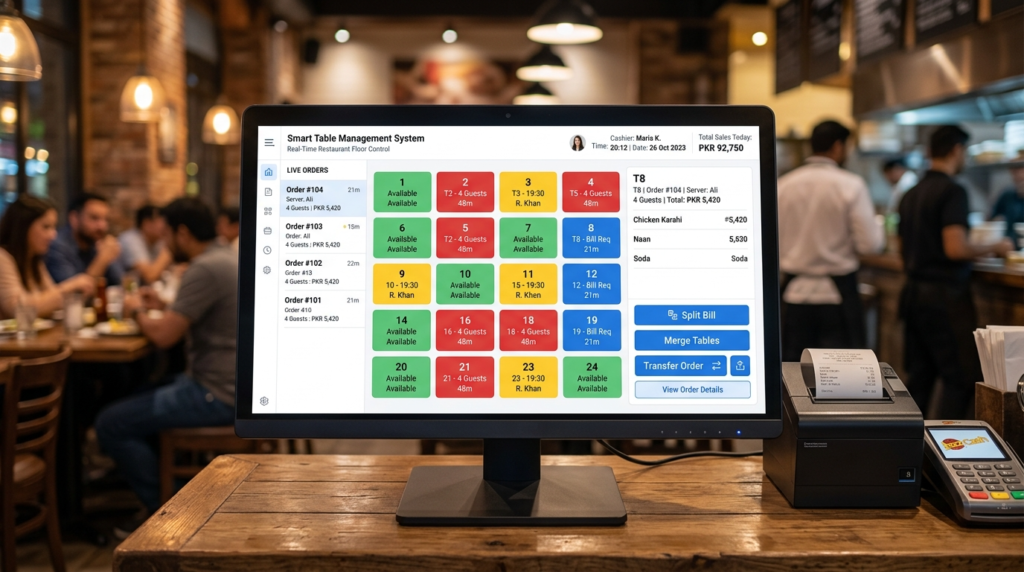
A good system should let your staff take orders from any table, split bills between customers, merge tables, and transfer orders, all without confusion. Look for a solution that supports both dine-in and takeaway workflows from a single interface. Color-coded table layouts that show which tables are occupied, waiting, or available save precious time during rush hours.
2. Integrated Kitchen Display System (KDS)
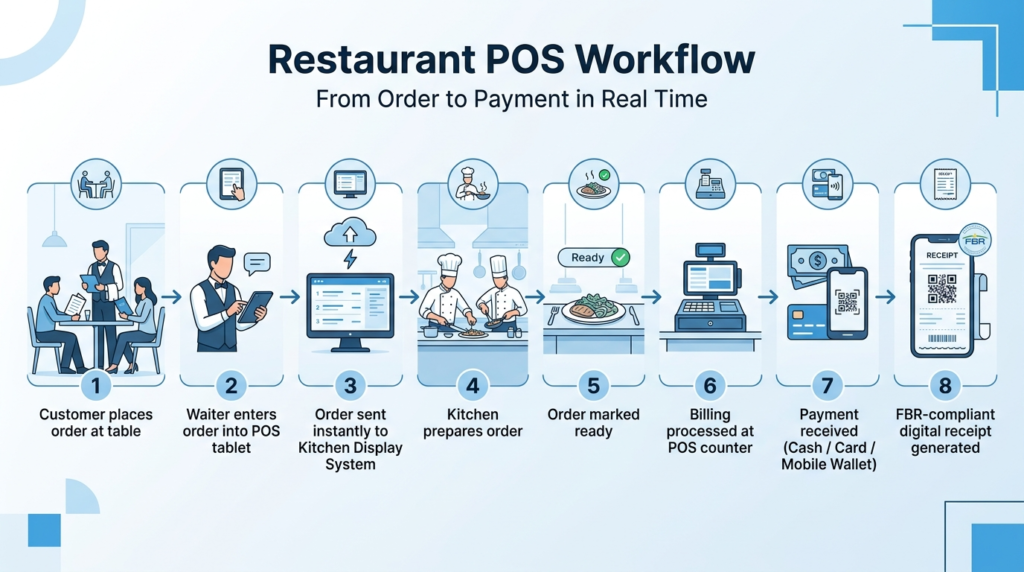
Gone are the days of paper tickets flying around the kitchen. A proper Kitchen Display System connects your front-of-house order-taking directly to kitchen screens. Orders appear instantly, reducing miscommunication and errors between servers and chefs. This is especially useful for high-volume restaurants where speed and accuracy are critical.
3. Real-Time Inventory Tracking
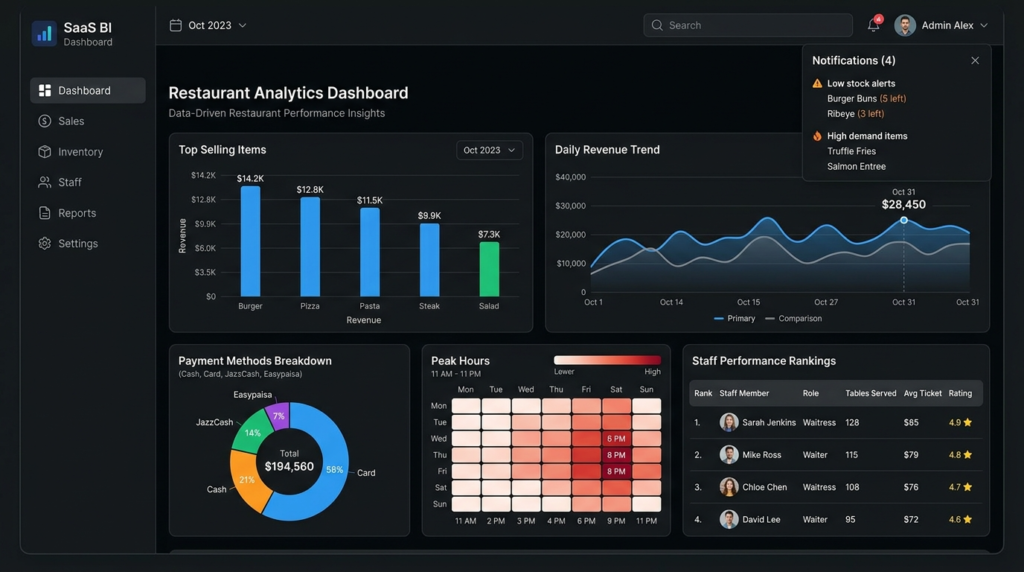
Every ingredient used in a dish should automatically be deducted from your stock count. Real-time inventory tracking lets you know when items are running low, prevents over-ordering, and cuts down food wastage, one of the biggest cost leaks in any restaurant. You should also be able to set low-stock alerts so you are never caught short during service.
4. Detailed Sales Reporting and Analytics
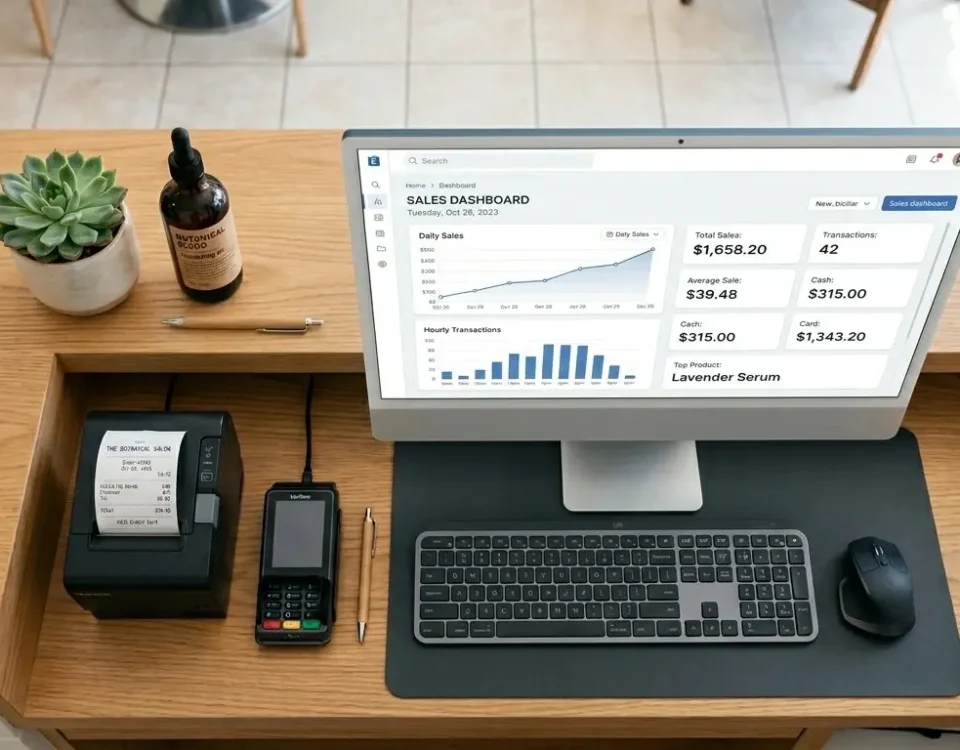
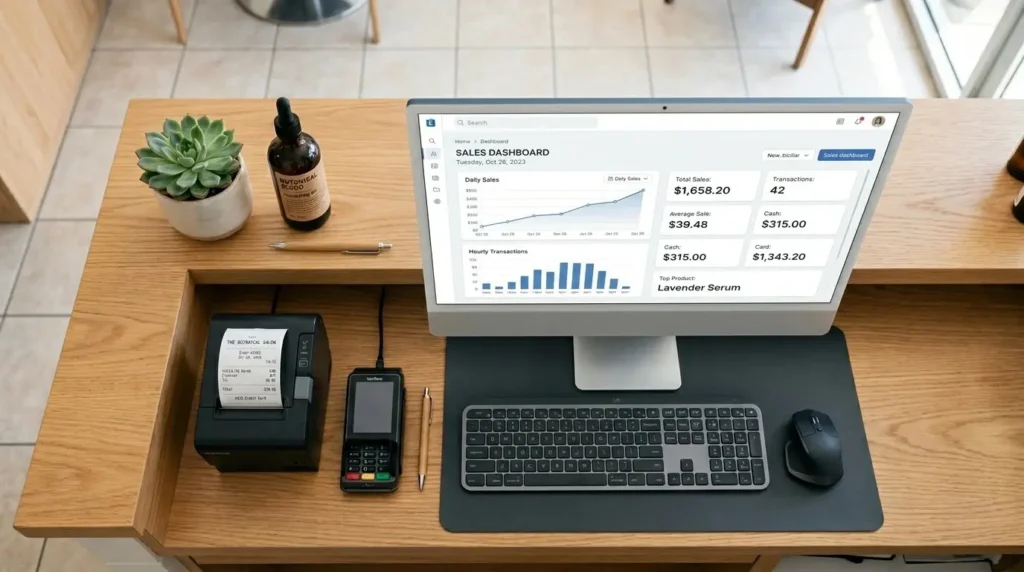
Data is your best business partner. A well-built system should generate detailed sales reports by day, week, month, item, or staff member. Understanding your bestselling dishes, peak hours, and revenue trends helps you make smarter decisions about staffing, promotions, and menu changes. Look for dashboards that give you this information at a glance.
5. Multi-Payment Method Support
Your customers pay in different ways, cash, credit card, JazzCash, Easypaisa, or bank transfer. Your system must handle all of them smoothly. Integrated digital payment support reduces manual errors, speeds up checkout, and improves the overall guest experience. In the Pakistani market especially, this flexibility is increasingly expected rather than appreciated.
6. FBR Integration for Tax Compliance
For restaurant owners in Pakistan, FBR integration is not a bonus feature, it is a legal requirement. Your system should automatically generate FBR-compliant receipts, manage tax calculations, and keep your records audit-ready. Non-compliance can result in penalties, so this is a feature you cannot compromise on. When choosing restaurant system, always verify that FBR integration is built-in and up to date.
7. Menu Management Flexibility
Your menu changes. Prices go up. Seasonal dishes come and go. A good system lets you update your menu in real time, add new items, mark dishes as unavailable, create combo offers, and run time-based promotions, all without needing technical support. This control is vital for keeping your operations agile.
8. Multi-Branch Management
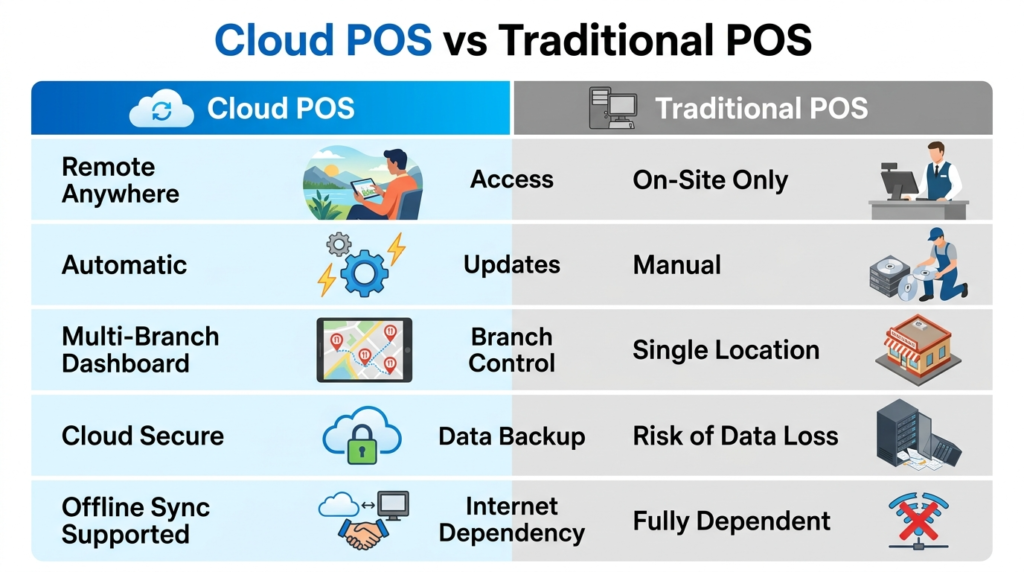
If you are growing or already operating across multiple locations, centralized management is critical. You should be able to monitor sales, inventory, and staff performance across all branches from one dashboard. This is one area where traditional vs cloud POS makes a real difference, cloud-based systems give you this visibility from anywhere, at any time, without being tied to on-site hardware.
Modern platforms such as myPOS support this kind of centralized, cloud-based control, making it easier for restaurant owners to manage multiple outlets efficiently without adding operational complexity.
9. Staff and Role Management
Controlling who can access what is essential for security and accountability. Your system should allow you to create different access levels for managers, cashiers, and waitstaff. It should also track individual performance, how many orders an employee handles, discounts given, and voids processed, so you can reward your best performers and address issues quickly.
10. Offline Functionality
Power outages and internet disruptions are a reality in Pakistan. A system that crashes the moment connectivity drops is a liability. Make sure your solution can continue processing orders and payments offline and sync the data automatically once the connection is restored.
Investing in the right technology can transform how your restaurant operates. To explore what best restaurant software solutions looks like in practice, it is worth understanding how different systems stack up against these criteria before making your decision.
Frequently Asked Questions (FAQs)
Q: What is the most important feature of a restaurant management system? Order accuracy and speed are the most critical. Features like kitchen display systems, real-time inventory updates, and table management directly impact the quality of service your customers experience.
Q: Does a restaurant billing system need to be FBR integrated in Pakistan? Yes. The Federal Board of Revenue (FBR) requires point-of-sale businesses, including restaurants, to use FBR-integrated systems that generate verified digital receipts. Non-compliance can lead to fines and operational disruptions.
Q: Can a single system manage both dine-in and delivery orders? Absolutely. A modern restaurant management solution should handle dine-in, takeaway, and third-party delivery orders from a unified interface, keeping your operations streamlined and your reporting consolidated.
Q: Is cloud-based restaurant software better than a locally installed system? Cloud-based systems offer key advantages for Pakistani restaurant owners, remote access, automatic updates, multi-branch visibility, and no dependence on local hardware. However, you must ensure the system has offline functionality as a backup given internet reliability challenges.
Q: How do I know if a POS system is right for my restaurant size? Start with your pain points. If you are losing track of inventory, struggling with cash reconciliation, or facing communication gaps between the kitchen and front desk, a feature-rich system can solve all of these. The right solution should scale with your business, whether you are running one outlet or ten.